
The supply chain of our pasta
What is meant by the pasta food supply chain?
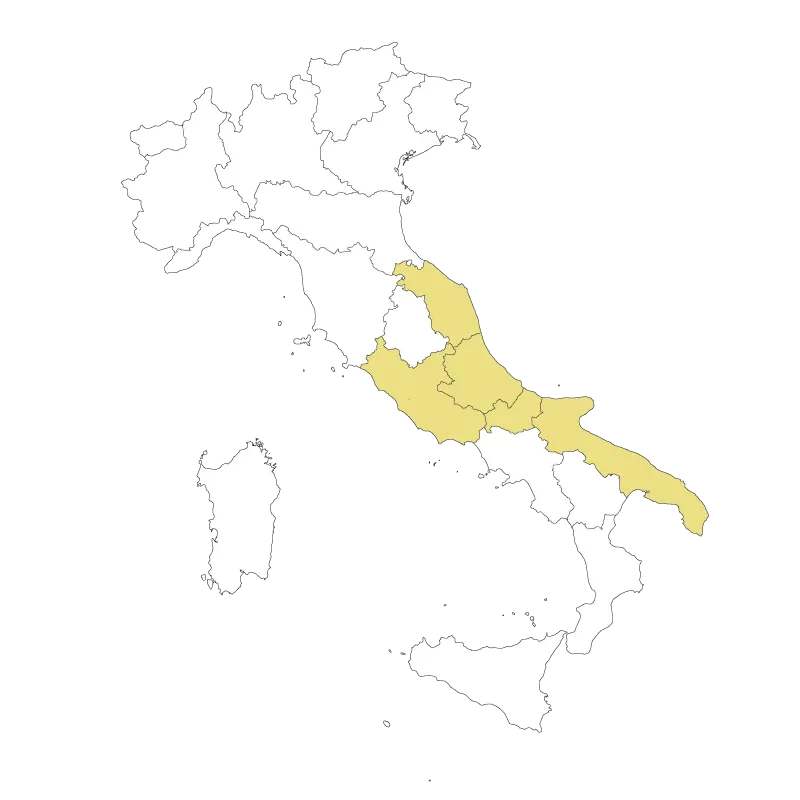
The first step in the supply chain is selecting the grains based on their nutritional properties. For production destined for the domestic market, the grains are exclusively Italian and grown in the central and southern regions of Molise, Marche, Puglia, Lazio, and Abruzzo.
We favored certain varieties, including Maestà, Don Matteo, and Marco Aurelio, for their qualitative characteristics and abundant yields.
The qualitative characteristics of wheat can be divided into four main areas:
1.
Productivity (or yield)
2.
Protein content
3.
Resistance to disease and environmental stress (agricultural system resilience)
4.
Technological and nutritional quality of the grain
Contribution to Agenda 2030

2. ZERO HUNGER
Target 2.4
By 2030, ensure sustainable food production systems and implement resilient agricultural practices that increase productivity and production, help conserve ecosystems, strengthen the capacity to adapt to climate change, extreme weather, drought, floods and other disasters, and progressively improve soil and soil quality.

8. DECENT WORK AND ECONOMIC GROWTH
Target 8.4
Progressively improve global resource efficiency in consumption and production in an effort to decouple economic growth from environmental degradation, in accordance with the 10-year framework of programmes on sustainable consumption and production, with developed countries taking the lead.

8. DECENT WORK AND ECONOMIC GROWTH
Target 8.8
Protect labour rights and promote a safe and secure working environment for all workers, including migrant workers, in particular women migrants, and those in precarious employment.
Wheat is admitted to our mill only if it meets strict standards and is accompanied by a grain passport. After a lengthy process of analysis and classification in the laboratory, the milling phase takes place: the wheat is sifted and separated from impurities and bran. To obtain flour, a cylinder is typically used to re-grind the grains until they become semolina. This is then mixed with pure water during the kneading phase. During the drawing phase, the dough is then pressed through a perforated Teflon or bronze cylinder, which gives the product its final shape. This is then dried through hot air cycles and finally cooled until it reaches the ideal temperature for packaging. Once this step is completed, the pasta is stored in silos until it moves on to the final packaging phase.

*180000
tons of durum wheat
What makes La Molisana's integrated supply chain special?
La Molisana is one of the very few companies in the sector that can boast an integrated supply chain: this means controlling the entire production process, from the wheat grain to the finished product.
This prerogative became even more evident in 2011, with the acquisition of the pasta factory by the Ferro Group, a family of millers for over a century and owners of a milling plant (Semolerie F.lli Ferro Srl) that currently produces approximately 180,000 tons of durum wheat, boasting a daily production capacity of approximately 600 tons and a storage capacity of approximately 200,000 tons.
The integrated supply chain creates significant competitive advantages. The synergy between the mill and the pasta factory ensures differentiation from most competitors, representing a guarantee for consumers in terms of traceability, safety, and consistent quality. It also offers significant economic advantages, thanks to economies of scale and production synergies.